Islamic Studies Across Divides in an Era of Crisis and Global Injustice
Saturday 24 - Sunday 25 January 2026
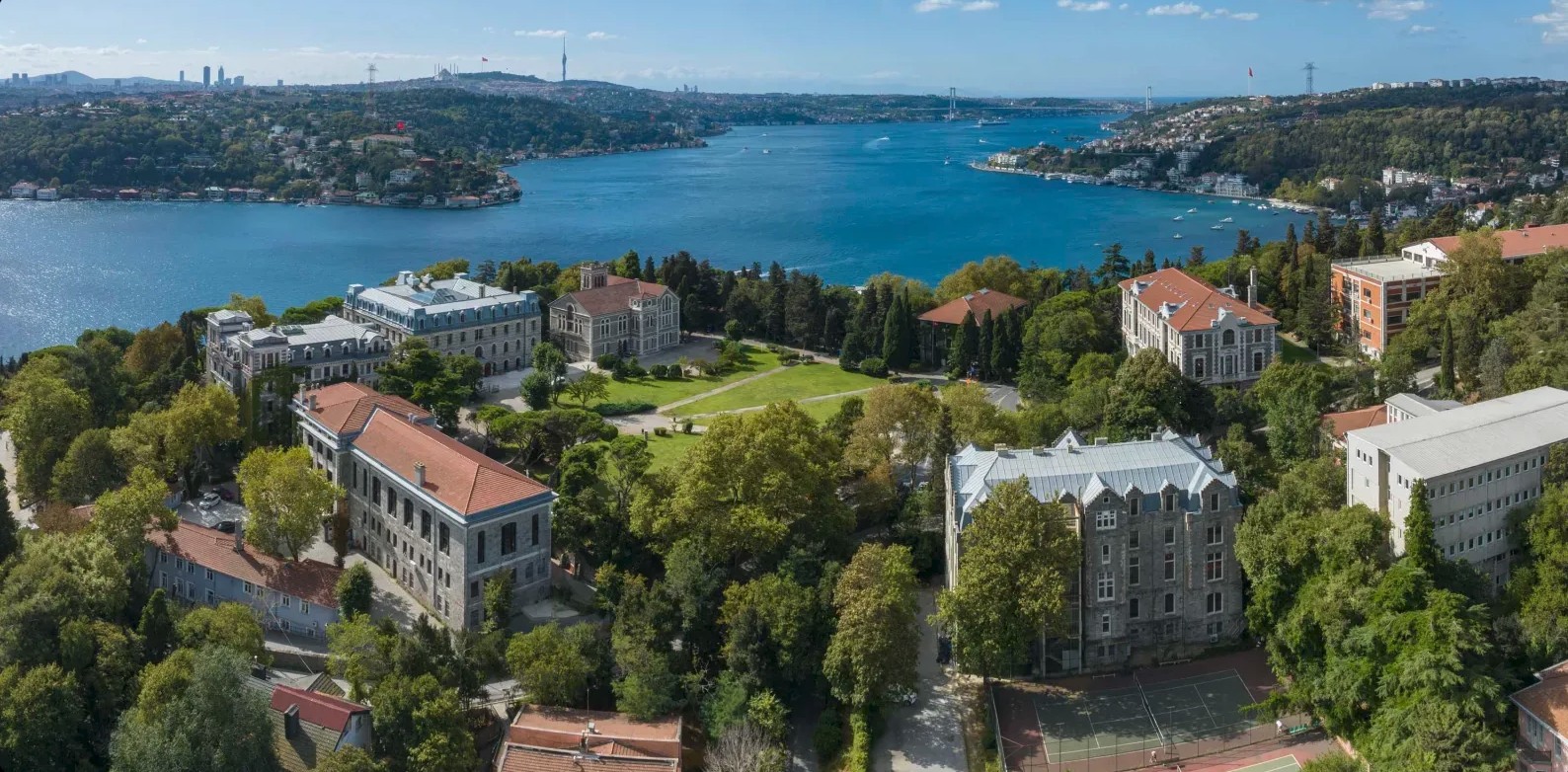
Boğaziçi University, South Campus, Istanbul
The British Association for Islamic Studies is proud to be co-hosting a landmark international winter symposium at Boğaziçi University, Istanbul.
As part of BRAIS’ desire to expand knowledge exchange with scholars in the Global Majority and diversify the academic fabric of Anglosphere academia, we present this unique symposium as an opportunity to facilitate exchange in the context of legalized genocide in Gaza, increasing inequality, and structural silencing of academics and their research.
Our symposium, taking place on the heart of the stunning Bosphorus strait—the meeting point between Europe and Asia—was made possible by the generosity of our colleagues and hosts at Boğaziçi University, as well as its foundation (BUVAKIF).
You an now register as a symposium delegate by CLICKING HERE.
Symposium Programme
Day 1: Saturday 24 January
09.00-9.30: Arrivals, Registration and Refreshments
9:30-9:40: Opening Speech by BRAIS Chair, Professor Fozia Bora
9:40-9:50: Address by the President, Professor M. Naci Inci, Boğaziçi University
9:50-11.20: Keynote Lecture (Demir Demirgil—Main Lecture Hall)
Prof. Heba Raouf Ezzat (Ibn Haldun University)
'Bringing the Cosmic Back in: The Shifting Boundaries of Islamic Studies'
Chair: Jaan S. Islam (Boğaziçi University)
11.20-11.30: Break and Refreshments
11.30-13:00: Panel Session 1
Islamic Studies, Media, and Global Injustice: Reframing Gaza and the Modern World Order (Demir Demirgil Hall)
Chair: Hasan Umut (Boğaziçi University)
Mustafa Elamin (Hamad Bin Khalifa University), Bridging Fractured Horizons: Reimagining Islamic Studies in an Age of Global Crisis and Injustice
Abdulfatah Mohamed (HBKU), Evolution of The Gaza Securitization and Terrorization Pre October 2023
Usaama al-Azami (HBKU), The Gaza Genocide through the Lens of the Propaganda Model: The Nuremberg Precedent and the Quest for Accountability
Ibtihal Ramadan (University of Birmingham), Chronologies of Complicity: Periodising Silence and the futility of Decolonisation in praxis in the Shadow of Gaza
Western Approaches to the Study of the Qurʾān and its Commentary (Room 301)
Chair: Alyaa Ebbiary (Lancaster University)
Necmettin Gökkır (Istanbul University), Postcolonial Qur’anic Studies and the Methodological Crisis: The Reconfiguration of Qur’anic Studies in Western and Muslim Scholarship
Shuaib Ally (Tübingen University), Language Use and Sophistication in the Pre-Modern Qur’an Commentary Tradition
Necmettin Salih Ekiz (Düzce University), Re-mapping Ottoman Tafsīr through Turkish-Language Scholarship: A Quantitative Analysis
Feyza Çelik (Kilis 7 Aralık University), Late Antiquity and the Qurʾān: Exploring Method and Context
Classical Tasawwuf and the Orientalist Imagination (Room 312)
Chair: Şahin Baykal (Boğaziçi University)
Khawar Amir (University of Leeds), From 'Tasawwuf' to 'Sufism': Rethinking Orientalist categories in Islamic Studies
Fatma Yüce (Samsun University), Is it possible to equate Sufism with Islamic mysticism? A Conceptual, Theoretical, and Practical Evaluation
Muhimin Wanchoo (Indian Institute of Technology Guwahati), “Like a Moth to a Flame”: Sufi Ethics and Vernacular Cosmopolitanism in Mazahir-i-Nur
Zeynep Şeyma Özkan (Marmara University), A Reading on the Degrees of Tawakkul in al-Qushayrī’s Risāla
13:00-14:00: Lunch
14.00-15.30: Panel Session 2
The Shadow of the Millet: Islamic Political Theology and the Afterlives of Ottoman Pluralism (Demir Demirgil Hall)
Chair: Hadiza Kere Abdulrahman (Lincoln University)
Yakoob Ahmed (Bildev), Between Sharia and Citizenship: Islamic Political Theology and the Question of Equality in the Ottoman Empire
Selçuk Aydın (Boğaziçi University), Historical Coherence Through Contradiction: Nationalism and Islam under the Spirit of Ottoman Solidarity
Behar Sadriu (University College London), Adem Ferizaj (SOAS), Occupy the master’s house: Kaleshi’s epistemologies against the omission of Islam in postcolonial readings of Europe
Owais Khan (Sabahattin Zaim), The Shadow of the Millet: Liberal Multiculturalism and the Muslim as Liberal Memory
Classical Doctrine and Modern Kalam: Heresiography and Polemics (Room 301)
Chair: Hasan Umut (Boğaziçi University)
Mücahid Topcu (Istanbul University), Modalism and the Limits of Radical Monotheism: A Critical Evaluation from an Islamic Perspective
Zeynep Koyuncu (Istanbul University), Defining Sectarian Boundaries in Colonial South Asia: Shah Abdulaziz Dihlawi’s Tuhfa-i Ithna Ashariyya
Kadir Gömbeyaz (Kocaeli University), Fakhr al-Dīn al-Rāzī As a Heresiographer
Thomas Simpkins (University of Cambridge), We Defend Reason, as it Defends Us: Mustafa Sabri’s Defense of Pure Reason and Rational Argumentation for God’s Existence
Islamophobia in the Media and Securitization of Muslims in the West (Room 312)
Chair: Usaama al-Azami (HBKU)
Salman al-Azami (Liverpool Hope University), Gendered Islamophobia in BBC TV drama Bodyguard
Nisa Efendioğlu (University of Leeds), Islamophobia in Turkiye: The Bursa Incident
Merve Temizer (Ankara Hacı Bayram Veli University), Cultural Dynamics of Social Solidarity in Turkey During the Gaza Crisis: A Sociological Analysis Through Digital Witnessing and Faith Practices
Luqyana Azmiya Putri (Indonesian International Islamic University), Palestine and the Digital Holocaust: Exploring Digital Warfare in the Palestinian Narrative and the Politics of Visibility
Decolonizing Islamic Education: Pedagogical and Anthropological Findings (Room 201)
Chair: Fozia Bora (University of Leeds)
Muhammad Asadullah (University of Regina), Exploring the Concept of ‘Decolonized Teaching’ in Higher Education: Experiences from a Canadian University Case Study
Nadia Talukder (Oxford University), 'They couldn't beat the teacherness out of me.' A pilot study investigating the experiences of Muslim student-teachers in Initial Teacher Education in England.
Haroon Sidat (Cardiff University), Roots and Revival: Reclaiming the Madrasa’s Intellectual Legacy
Ayşe Betül Dönmez Tekin (Yalova University), Decolonizing the Historiography of Islamic Philosophy in the Post-Orientalist Period
15.30-15.45: Refreshments
15.45-17.15: Panel Session 3
The Veil in View: Piety, Politics, and Pressure in Contemporary Türkiye (Demir Demirgil Hall)
Chair: Jaan Islam
Mehmet Ali Basak (Ibn Haldun University), Mapping Headscarf Wearing Women in Türkiye: Piety, Politics, and Place
Şeyma Kabaoğlu (Ibn Haldun University), Banking on Headscarves: Politics of Visibility in Islamic Participation Finance in Türkiye
Feyza Uzunoğlu Saçmalı (Ibn Haldun University), Navigating Digital Scrutiny: The Dual-Sided Pressure of the "Perfect Muslim Woman" and Hijab Abandonment in Contemporary Türkiye
Necmiye Durmuş (Ibn Haldun University), Religious Thought vs. Communal Pressure in Türkiye: Navigating the Gaze of Al-Alam
From Statement to Record: Decolonizing Hadith and Biographies (Room 312)
Chair: Kenan Tekin (Boğaziçi University)
Mariam Attia (The Classical Institute), The Pedagogical Contribution of Early Hadith Scholarship
Hasher Nisar (University of Michigan), ’A Mirror of the Times’ (Mirʾat al-Zamān): Conceptualizing & Measuring Ulama-State Relations with Biographical Dictionaries
Sevdenur Kaya (Ankara Social Sciences University), Epistemic Justice in Hadith Interpretation: Reflections in the Age of Science
Esra Evsen Aydın (Mardin Artuklu University), The Sixteenth-Century Jerusalem Sharʿiyya Records (Sijillāt) as a Significant Source for ʿUlamāʾ Studies
The Qurʾān, Late Antiquity, and the Shaping of a New Community (Room 301)
Chair: Şeyma Kabaoğlu (Ibn Haldun University)
Seyfeddin Kara (University of Groningen), Beyond the Patriarch: The Qur’an’s Abraham as an Archetype of Revolutionary Devotion
Suleyman Dost (University of Toronto), Fasting in the Qur'an and Early Islam: A Comparative Look at a Late Antique Practice
Yusuf Ünal (University of Utrecht), Recasting the Romans: Qur’anic Prophecy and the Ottoman-Safavid Rivalry
17.15-17:30: Refreshments
17.30-19.00: Panel Session 4
Themes in Muslim Liberation Theology (Demir Demirgil Hall)
Chair: Joseph J. Kaminski (International University of Sarajevo)
Shadaab Rahemtulla (University of Edinburgh), Islam(ism) and the Left: Mawdudi and Qutb in Comparative Perspective
Heba Raouf Ezzat (Ibn Haldun University), Beyond Order and Disorder: Heterarchy, Anarchy and the Islamic Futures
Ivan Ejub Kostić (University of Belgrade), Muslim Liberation Theology in Europe: Epistemic Sovereignty and the Pluriversal Horizon
Emin Poljarević (Uppsala University), Trusteeship in Practice: Muslim Civic Liberation
Resisting the ‘Leviathan’: State Regulation of Family and Marriage (Room 312)
Chair: Tom Woerner-Powell (University of Manchester)
Canan Ates (Lancaster University), British Muslim Women and the Problem of Limping Marriages: Could the Divorce Act 2002 Offer a Legal Solution?
Yomna Helmy (University of Cambridge), Beyond the Alhambra Palace: Recovering Everyday Legal Lives in Al-Andalus
Şeyda Karabatak (Marmara University), Trust and Religious Self-Representation in a Transnational Marriage Context: An Ethnographic Study in Rural Turkey
Sovereignty Redefined: Formations and Transformations in Classical and Early Modern Islamic Thought (Room 301)
Chair: Yakoob Ahmed (Bildev)
Furkan Simsek (Ibn Haldun University), Moral Survival and Statal Sovereignty: Revisiting Ibn Bājjah’s Tadbīr Today
Ahmet Çelik (Colgate University) Distributed Sovereignty: Epistemic, Political, and Divine Sovereignties in Classical Islam
Furkan Senturk (Columbia University), Between Interpretation and Sovereignty: The Madhhab as Constitutional Form
Ahmed Elbenni (Princeton University), Is God the Only Author of History? Shah Wali Allah and the Arab Problem
Day 2
09.00-9.30: Arrivals, Registration and Refreshments
9.30-11.00: Panel Session 1
Unveiling Power: Gendered and Embodied Realities of Muslim Women’s Negotiations of Justice, Ethics, Knowledge and Identity in Northern Nigeria (Demir Demirgil Hall)
Chair: Fozia Bora (University of Leeds)
Hadiza Kere Abdulrahman (University of Lincoln), "A Wisdom of Care”: Women's Relational Practices as Pathways for Reimagining Qur’anic Schooling in Northern Nigeria.
Safiyyah Ummu Mohammed (Usmanu Danfodiyo University), Women, shariah and Family Law in Postcolonial Northern Nigeria: Negotiating Rights and Religious Praxis
Fatima Kere Ahmed (Code of Conduct Bureau, Nigeria), Bridging Divides: Islamic Ethics, Women's Participation and Anti-corruption in Northern Nigeria.
Safiya Hamis (University of Birmingham), Islamic clothing in Northern Nigeria: Empowerment or Oppression? Rethinking the narrative of Muslim Women's Agency
Unveiling the History of Science and Knowledge Production in the Premodern Islamicate (Room 301)
Chair: Haroon Sidat (Cardiff University)
Hasan Umut (Boğaziçi University), Traditional Cosmology in the Early Modern Ottoman Context: al-Karamānī's Reception of al-Suyūṭī’s Cosmological Treatise
Sena Aydin (Istanbul Medeniyet University), Tanqīḥ al-Manāẓir and The Lineage of Scholars of Optics in the Ottoman Era
Kenan Tekin (Boğaziçi University), Taşköprîzâde’s Shaqā’iq al-Nu‘māniyya on 15th Century Ottoman Philosophical Contributions
Decolonizing Epistemology and Metaphyisics (Room 312)
Chair: Sinan Siyech (University of Wolverhampton)
Rehman Anwer (University of Glasgow), British Orientalism and anti-Sufi Hostility in South Asia: An analysis of Muhammad Iqbal’s Evolving Views on Sufism
Marcus Hibbeln (University of Exeter), The Critique of Disaster: Constantine Zurayk on Arab Civilisation and the Palestinian Expulsion
Muhammad Syafiq Borhannuddin (IKIM), Syed Muhammad Naquib al-Attas in Modern Islamic Intellectual History
Zeynep Nur Şimşek (University of Bologna), “Voltaire Aleyhisselam, Rousseau Radıyallahu Anh”: The Islamification of Enlightenment Thought in Ottoman Modernization
Trauma and Healing During Crisis: An Interdisciplinary Perspective (Room 201)
Chair: Alyaa Ebbiary (Lancaster University)
Sheam Abdul Aziz Khan (Cardiff University), Between Wound and Word: How the Lived Traumas of Qur’anic Exegetes and Translators Shape the Qur’anic Message in an Era of Crisis.
Fella Lahmar (HBKU), Trauma-Informed Maqāṣidī Pedagogy (TiMP): An Islamic Framework for Educational Healing in Post-Genocide Gaza
Adnan Bülent Baloğlu (Haci Bayram University) and Zişan Cihangir Işın (Ankara Bilim University), Black Swan Resilience in Post-Entrepreneurial Trauma
Farsana KP (Kalinga Institute of Industrial Technology), Healing at the Crossroads: Indigenous and Islamic Epistemologies Among Muslim Healers in Malabar, Kerala
11.00-11.15: Refreshments
11.15-12.45: Panel Session 2
Violence, Authority and the Search for Legitimacy in Islamic Political Thought: Abbasid Baghdad to the Syrian Revolution (Demir Demirgil Hall)
Chair: Hüseyin Gökalp (Selçuklu University)
Enes ER and Ibrahim Hakkı INAL (Ondokuz Mayıs University), The Theology of Crisis: Al-Juwaynī’s Quest for Legitimacy in Times of Turmoil in al-Ghiyāthī
Mehdi Berriah (French Institute for the Near East), Pragmatic Reasoning in Times of Crisis: Ibn Taymiyya’s Contextual Approach to Law and Society
Jaan Islam (Boğaziçi University) and Sinan Siyech (Wolverhampton), Siyāsa Shar’iyya in HTS, IS and al-Qaeda Texts: Competing Visions of Islamic Government
Tim Jacoby (University of Manchester), Islam and the Islamic State
Towards an Islamic Macroeconomics? Exploring the Rift between Shari’a-Compliant Finance and the Global Capitalist System (Room 312)
Chair: Tom Woerner-Powell (University of Manchester)
Mohammad Nazim Uddin (International Islamic University Chittagong), Green Fundraising Theory and Shariah-Compliant Resilient in Islamic Banks of Bangladesh
Hüseyin İçen (Sabahattin Zaim University), The Origin of Fatwas in Saudi Islamic Banking within the Dilemma of Sharia and Legislation (Nizam): Which Prevails More, the Fiqh Academy or International Standard Setter?
Zhamal Nanaeva (Nordic Center for Islamic Economics and Finance), From Speculation to Stewardship: Islamic Finance and Renewal of the Global Financial Order
Hajar Fanadi (Ibn Zohr University), The Legal Maxim “No Harm, No Harassment” (Lā Ḍarar wa Lā Ḍirār) and Its Contemporary Applications in Real Estate and Environmental Law: Bridging Classical Islamic Jurisprudence and Modern Legal Systems
Unveiling the Structural Forces of Genocide and Violence: Palestine and Beyond (Room 301)
Chair: Hadiza Kere Abdulrahman (University of Lincoln)
Fatimaezzahra Abid (Mohammed V University), Cultural Diversity or Civilizing Conformity? A Critical Reading of Western Universalism through Arab-Islamic Thought in the Shadow of 2023 Gaza Ongoing Genocide
Mohamed Sayed (Al-Azhar Univeristy), Religious Media in Times of Genocide: The Discourse of Islamic Institutions’ Platforms on the Israeli Aggression against Gaza as a Model
Hüseyin Gökalp (Selçuk University), From Religious Discourse to State Engineering: The Structural Dynamics of Genocide in al-Andalus and Palestine
Sharaiz Chaudhry (Independent Researcher), The Quest for Liberation: Islamic Unity and the Struggle Against Zionism in West Asia
12.45-13.45: Lunch
13.45-15:15: Panel Session 3
Islamic Political Theory: A Novel Endeavour with New Perspectives to the State, Constitution, and Modern Statutes (Demir Demirgil Hall)
Chair: Jaan Islam
Joseph J. Kaminski (International University of Sarajevo) and Usaama al-Azami (HBKU), Islam, Liberal Proceduralism, and the Case of Ahl-Al-Dhimma
Büşra Sıdıka Kaya (Ibn Haldun University), Reconstructing Islamic Knowledge in a Global Framework through Bourdieu–Asad–Hallaq
Yusuf Şahin (Bingöl University), The Theological and Political Boundaries of Islamic Theism: The Implications of the Medina Charter
Aurangzeb Haneef (Lahore University of Management Sciences), Islam, Ecology, and Decolonial Thought: The Environmental Ethics of Maulana Wahiduddin Khan (1925-2021)
Ethics and Resilience in Islamic Economics (Room 312)
Chair: Haroon Sidat (Cardiff University)
Muhammad Nabil (University of Birmingham), Mercy in Motion: rethinking Islamic philanthropic responses to displacement and refugees
Muhammad Ek (University of Hydrabad), Moral Economies of Giving: Islamic Charity and Ethics of Care in Contemporary South Asia
Usman Ali Kagazgar and Iftekhar Ahmed Ansari (Aligarh Muslim University), Trends and Trajectories in Waqf and Sustainable Development Goals: A Bibliometrics Analysis
Fiqh in Palestine and Damascus: Systematization and Controversies in Ottoman Jurisprudence (Room 301)
Chair: Sinan Siyech (Wolverhampton University)
Öznur Özdemir (Bursa Uludag University), From Text to Data: Tracing Monetary Thought and Policy in Classical Islamic Sources
Şaban Kütük (Istanbul University), The Killing of the Aggressor in Cases of Attempted Adultery in Sixteenth-Century Ottoman Law
Mahade Hasab (UCLA), Interdiction, not Insolvency: Ibn Ḥajar al-Haytamī and the Limits of Autonomy in Early Modern Shāfiʿī Law
Maariyah Lateef (Brown University), Regulating Grief: Ibn Abidin and the Ethics of Mourning in Ottoman Damascus
15.15-15.30: Refreshments
15:30-17.00: Panel Session 4
Decolonizing Muslim Identity and Knowledge Production in South Asia (Demir Demirgil Hall)
Chair: Usaama al-Azami (HBKU)
Mohammed Sinan Siyech (University of Wolverhampton), Salafism and its engagement with Democracy and Secularism: Lessons from India
Obaidur Rahman Naufal (Ibn Haldun University), Neither They Die nor Live: Rashid Shaz on Secularity, Sovereignty, and the Bare Life of Indian Muslims
Minhazul Abedin (Istanbul University), Islamic Culture in Türkiye: Through the Eyes of Bengali Muslim Intellectuals (1912-52)
Md Minhajul Arefin (BRAC University), Unveiling the Dynamics of Muslim Education and Expansion in Bengal under British Colonial Rule: A Historical Investigation
Constructing Human Purpose between Grace and Violence: Explorations in Theology and Political Theory (Room 312)
Chair: Mehmet Ali Başak (Ibn Haldun University)
Badreldeen Ismail (University of Nottingham), Ethics Beyond Voluntarism: Mystical Taḥqīq in al-Bāqillānī’s Theology of Grace
Mustafa Yüce (Necmettin Erbakan University), Gaza Resistance in Contemporary Theology: Jihad and Ummah from the Muslim Brotherhood to Hamas
Hanane Benadi (LSE), Religion and the re-orientation of human flourishing: Life, death, and the limits of progress amidst the climate crisis
Süleyman Bütüner (Necmettin Erbakan University), The Transformation from Christian Zionism to Jewish Zionism
Legal Theory and Wisdom of the Shari’a: Debates on Legal Interpretation and Contemporary Application (Room 301)
Chair: Şahin Baykal (Boğaziçi University)
Feyza Goren (Cardiff University), Sarakhī’s Sunnah Methodology as an Integration of Ḥadīth and Legal Theory in the Ḥanafī Tradition
Abdullah Almatar (PAAET, Kuwait), The Semantic Nature of Revelation Texts: Imam al-Shafi‘i’s al-Risāla as a Model
Gaber Mohamed (Sharjah University), The Public-Private Distinctions in the Criminal Justice Institutions of the Modern Muslim State
Muhammed Furkan Cinisli (Boğaziçi University), Between Autonomy and Obedience: Reassessing the Modern Human Definitions in Light of Islamic Epistemology
17.00-18.00: Refreshments & Informal Networking