
The British Association for Islamic Studies (BRAIS) is delighted to announce the outcome of the 2025 BRAIS Prize in the Study of Islam and the Muslim World.
This year, we were overwhelmed by the high number of exceptional submissions we received and the Prize has therefore been awarded to two joint winners:
Dr Razieh S. Mousavi (PhD awarded by the Humboldt University of Berlin)
&
Dr Leone Pecorini Goodall (PhD awarded by the University of Edinburgh)
Very many congratulations to both of our winners whose manuscripts were praised in the highest possible terms by our Prize Reviewers and Committee Members. You can learn more about Dr Mousavi and Dr Pecorini Goodall's submisions below.
BRAIS would like to thank everyone who submitted a manuscript for this year's Prize and all those who provided references for applicants. We would also like to offer our profound thanks to the many reviewers across the world who gave of their time so generously, and to our Prize Committee who had the very difficult task of selecting our winner. Particular thanks also to Prize Chair, Dr Saeko Yazaki, and Prize Coordinator, Adam Ramadhan, for their essential work in overseeing the Prize in all its complexity.
The 2026 Prize round is now open for submissions with a submission deadline of 30 January 2026. To learn more and to submit your thesis CLICK HERE.
Meet our 2025 winners and learn more about their outstanding theses:
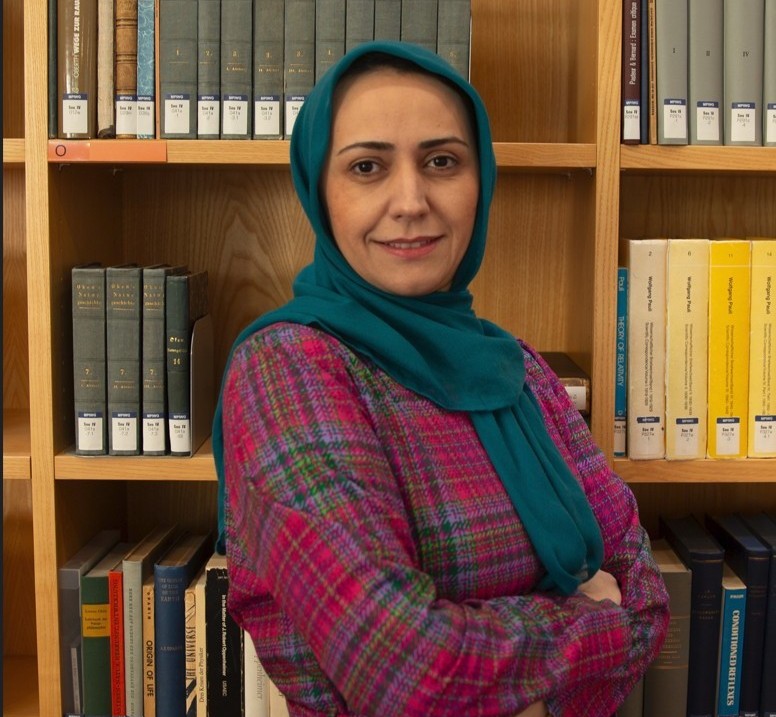
At the centre of this study lies the Elements of Astronomy, a thirty-chapter treatise composed in Arabic in the mid-ninth century by Aḥmad al-Farghānī, which played a significant role in the dissemination of astral knowledge throughout the premodern era. Drawing primarily upon Ptolemaic planetary theories, the treatise circulated under various titles, including Jawāmiʿ ʿilm al-nujūm wa-uṣūl al-ḥarakāt al-samāwiyya (‘Summaries of the knowledge of the stars and the elements of celestial motions’) and al-Fuṣūl (‘Aphorisms’), and achieved wide diffusion not only in Arabic but also through translations into Latin and Hebrew. Modern scholarship, however, has tended to approach such texts primarily as mathematical constructs, devoting less attention to their literary and rhetorical dimensions, including their strategies of presentation, narrative functions, and pedagogical framing. My dissertation aims to address this gap by examining the ways in which al-Farghānī re-organised and re-articulated Ptolemy’s Almagest—a 2nd-century Greek treatise on mathematical modelling of the cosmos—employing a classificatory language that both epitomised and rendered complex planetary models more accessible to a wider readership. I argue that this innovative mode of presenting astral knowledge emerged from the specific intellectual and institutional conditions of al-Farghānī’s era: a formative period characterised by the active participation of astronomers in both the translation activities and the drive to standardise scientific practices under Abbasid rule. In particular, I suggest that the influence of Greek classificatory methods, transmitted primarily through contemporary medical translations, provided a novel conceptual and literary framework for conveying scientific knowledge in Arabic. This framework, I argue, shaped the strucutral and communicative design of al-Farghānī’s treatise.
My dissertation therefore approaches the Elements of Astronomy as both a repository of scientific knowledge and a literary-epistemic work, highlighting how the interplay of content and form expanded its reach to diverse audiences. Beyond this analytical perspective, the dissertation offers a new critical Arabic edition of the Elements of Astronomy, based on the first survey of eighteen extant manuscripts. It also provides the first complete English translation of the Arabic text, accompanied by extensive annotations that elucidate both al-Farghānī’s astronomical theories and the literary strategies through which his work was structured and transmitted.
Dr Leone Pecorini Goodall (PhD awarded by the University of Edinburgh)