BRAIS 2019
The Annual Conference of the British Association for Islamic Studies
Monday 15th - Tuesday 16th April 2019
Teaching and Learning Building, University Park, University of Nottingham, NG7 2RD
PROVISIONAL PROGRAMME (SUBJECT TO CHANGE)
All panels and plenaries will take place in the Teaching and Learning Building, University Park, University of Nottingham, NG7 2RD.
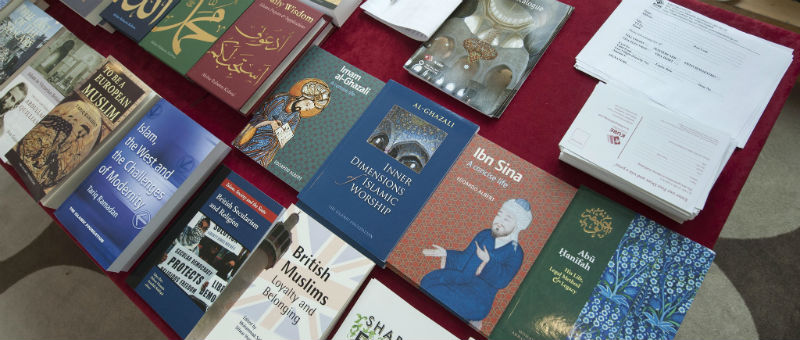
The Publisher Exhibition will be located on the Floor D Foyer where lunches and refreshments will also be served.
Sunday 14th April
15:00 – 23:30 Arrival and Registration (arrivals after 23:30 must inform the conference organizers three days in advance).
Monday 15th April
08:00 – 09:00 Breakfast (Halal) in Cavendish Hall for those in conference accommodation
09:30 – 09:45 Words of Welcome from BRAIS Chair (Ayman Shihadeh) and our hosts at the University of Nottingham (Jon Hoover)
Room A03
09:45 – 11:00 Plenary (Room A03)
Khaled Fahmy (Cambridge University), ‘Implementing Shari'a in Modern Egypt: A Medical Perspective’
Chair: Ayman Shihadeh (SOAS)
11:00 – 11:30 Coffee/Tea (Floor D Foyer)
11:30 – 13:00 Panel Session 1
1. Emigration: Conceptualising hijra from the Qur’an to medieval Islamic thought (Room D02)
Chair: Saqib Hussain (University of Oxford)
Saqib Hussain (University of Oxford) Displacement and Punishment: hijra and militancy as components of the Qur’an’s punishment stories
Hasher Nisar (University of Oxford) Exploring the Concept of hijra in Qur’anic Commentaries
Nabeelah Jaffer (University of Oxford) The Estranged Emigrant: Ibn Qayyim al-Jawziyya’s engagement with hijra and ghurba
2. Contemporary Muslim Societies in the Middle East and Asia (Room D04)
Chair: Dietrich Reetz (Berlin Graduate School of Muslim Cultures and Societies)
Corina Lozovan (Lund University) Religion in a landscape of change: the role of Ibadi-Islam in contemporary Omani society
Geoffrey Nash (SOAS) Women madrasa students access to mainstream university education in India
Alexander Weissenburger (Austrian Academy of Sciences) The concept of the Zaydi Imamate and its role in Yemen’s current crisis
3. Medieval Muslim Societies (Room D06)
Chair: Hugh Goddard (University of Edinburgh)
Philip Grant (University of Edinburgh) Neither free markets nor state intervention: economics and al-sulṭān in the high Abbasid period
Yossef Rapoport (Queen Mary University of London) City plans in medieval Islam
Lubaaba Al-Azami (University of Liverpool) Princess Power: Imperial Formation and the Mughal Zenana
4. Classical Islamic Theology and Philosophy (Room D10)
Chair: Feriel Bouhafa (University of Cambridge)
David Bennett (Göteborgs Universitet) Sense Perception in early Kalām
Hannah Erlwein (LMU Munich) The Function of the sharīʿa in Ibn Sīnā’s Political Thought
Fuga Kimura (University of Tokyo) Comparative Study between al-Ghazālī and Maimonides: their theory about obligation of repentance to God based on human free will
5. Early Islamic Law (Room D11)
Chair: Alison Scott-Bauman (SOAS)
Salman Younas (University of Oxford) Istiḥsān in the Early Ḥanafī School
Hassaan Shahawy (University of Oxford) Subjective Legal Reasoning in the Formative Period: An Empirical Anatomy of al-Shaybānī’s Aṣl
Mohammad-Payam Saadat-Sarmadi (University of Exeter) Qiyās upon Qiyās: al-Shāfiʿī’s analogical arguments for analogy and their reception
Youcef Soufi (University of British Columbia) The Rise of the Munāẓara in Classical Islamic Legal Thought
13:00 – 14:00 Lunch (Floor D Foyer)
14:00 – 15:30 Panel Session 2
1.Clerical Networks, Discourses and the State in Modern Twelver Shi’ism (Room D02)
Chair: Oliver Scharbrodt (University of Birmingham)
Mohammad Mesbahi (The Islamic College) An assessment of the collective leadership of Maraje Thalath
Christopher Pooya Razavian (University of Birmingham) Motahari and the Consequences of Instrumental Reason: State, Social Justice, and Fitrah
Oliver Scharbrodt (University of Birmingham) Modernising clerical authority in Twelver Shiism: consultation (shura), clerics, and the state
Yousif Al-Hilli (University of Birmingham) The political influence of the Najafi Marja’iyya in contemporary Iraq: the role of Friday midday prayer sermons in 2014
2. Islam and Society in the UK and Europe (Room D04)
Chair: Seán McLoughlin (University of Leeds)
Fella Lahmar (Markfield Institute of Higher Education) Practising Islam, Fundamental British Values and Muslim schooling
Musleh Faradhi (Markfield Institute of Higher Education) The application of Fiqh al-Aqalliyyat in British Islamic Schooling
Sufyan Abid Dogra (Bradford Institute for Health Research) Using Islamic narrative for healthy lifestyles: The scope of mosques and madrassa in the UK to deliver a health promotion intervention
Glen Moran (University of Birmingham) Harun Yahya and the “rise in Islamic creationism"
3. Sunni Law School Dynamics in History (Room D06)
Chair: Omar Anchassi (University of Edinburgh)
Elias Saba (Grinnell College) Coherence from Disagreement: Disputations and Distinctions in Early Islamic Law
Mohammed Al Dhfar (University of Nottingham) Al-Subkī on how the beginning of the month of Dhū al-Ḥijja should be determined
Mustafa Baig (University of Exeter) Living in non-Muslim Lands: Maliki legal positions in Almoravid Spain
Farah El-Sharif (Harvard University) The Salafi Sūfis of 19th Century West and North Africa
4. Early Islamic History and Literature (Room D10)
Chair: Yossef Rapoport (Queen Mary University)
Mohammad Ghandehari (University of Tehran) Sulaym b. Qays al-Hilālī or Abū Sadiq al-Azdī?: The question of authorship for the oldest surviving Shī‘ite book
Nuha Alshaar (The Institute of Ismaili Studies/American University of Sharjah) Pre-Modern Arabic Literary Anthologies and the Social Imaginary: The Construction of Social, Cultural and Political Paradigms
Fozia Bora (University of Leeds) What’s in a mukhtaṣar? Abridgement as epistemic agency
Sohail Hanif (University of Oxford) The Hanafi Classification of Legal Rulings
5. Modern Islamic Theology (Room D11)
Chair: Hannah Erlwein (LMU Munich)
Naira Sahakyan (University of Amsterdam) Dialogue with Materialist: The Rise of the Soviet Atheism and the Daghestani Scholars of Islam
Taraneh Wilkinson (FSCIRE) Tawhid as a Response to Pluralism in Turkish Muslim Thought
Serafettin Pektas (UC Louvain) Imago Raḥmān: A Modern Muslim Theological Anthropology
Ramon Harvey (Ebrahim College) Reasoning from the Quantum to God: A Neo-Māturīdī Stance
6. Islamic Texts, Biblical Sources and Oriental Archives (Room D08)
Chair: Yazid Said (Liverpool Hope University)
David Vishanoff (University of Oklahoma) Origins and Sources of the Islamic Psalms of David
Seyfeddin Kara (Hartford Seminary) Comparing the levels of faith in the Bible and Qur’an: Examining the Parables of the Sower and the Rainstorm
Nayra Zaghloul (University of Oxford) The Ouseley Manuscripts: A History
15:30 – 16:00 Coffee/Tea (Floor D Foyer)
16:00 – 17:30 Panel Session 3
1. Medieval Islamic Theology, Philosophy and Science (Room D02)
Chair: Feriel Bouhafa (University of Cambridge)
Michael Noble (LMU Munich) The Occult Source of Fakhr al-Dīn al-Rāzī’s Counter-Avicennan Prophetology
Safaruk Chowdhury (The King Fahad Academy) Destructibles and Indestructibles: Examining Some Problems Related to Resurrection and Bodily Continuity in Medieval Islamic Theology
Omar Anchassi (University of Edinburgh) Stacks of Plates and Cosmic Kebabs: Some Reflections on Muslim Receptions of Scientific Cosmographies
2. Islam and gender in Britain (Room D04)
Chair: Hossein Godazgar (Al-Maktoum College of Higher Education)
Saleema Burney (SOAS) Ordinary women, extraordinary lives: a case study of British Muslim Women negotiating successful, hybridised identities in the ‘third space’
Nicole Lehmann (Nottingham University) The Muslimah entrepreneur and how religion informs their intersectional social positioning
Basma Elshayyal (Warwick University) The phone’s your dunya, the mushaf’s your akhira”: the impact of Qur'anic study on Young British Muslim Women
3. The Qur’an and Its Interpretation I (Room D06)
Chair: Shuruq Naguib (Lancaster University)
Redhwan Karim (SOAS) Zīna’ in the Qur’ān: a study of Qur’ānic intra-textuality
Shafi Fazaluddin (SOAS) Conciliation and Conflict in the Meccan and Medinan Qur’an
Simon Loynes (University of Edinburgh) The concept of divine sending down (tanzīl) in the Qur’an
4. Hadith and Law (Room D10)
Chair: Sohail Hanif (Cambridge Muslim College)
Usman Ghani (American University of Sharjah) Ḥadīth usage in Ḥanafī Fiqh: A case study of al-Marghinānī’s al-Hidāya
Rahile Kizilkaya Yilmaz (Marmara University) Same author and two different commentaries: Ibn ‘Abdul Barr and his commentaries of the Muwatta’ at-Tamhīd and Al-Istidhkār
Mostafa Movahedifar (University of Birmingham) New contemporary approaches to the isnād in Shīʿī scholarship on aḥādīth: the examples of Abu al-Qasim al-Khoei (d. 1992), Mūsā al-Shubayrī al-Zanjānī (b. 1928) and Ahmad al-Madadī (b. 1951/1952)
5. Thirteenth and Fourteenth Century Islamic History (Room D11)
Chair: Fozia Bora (University of Leeds)
Tarek Makhlouf (University of Melbourne) The Success of Andalusian Philological learning in the Mashriq
Mourad Laabdi (Carleton University) Ibn Khaldun on Law and Society: The Germ of a Social History of Islamic Law
Alexander Khaleeli (University of Exeter) Re-evaluating the state of Twelver Shi'ism in pre-Safavid Iran - the case of Ibn al-Makki (k. 1384) and the Sarbadars
6. Islam and Contemporary Politics (Room D08)
Chair: Mohammad Mesbahi (The Islamic College)
Carlos Mendez (University of Edinburgh) The Silent Threat to the Islamic Republic from Within
Naser Ghobadzadeh (Australian Catholic University) Nested game of elections in Iran
Laura Thompson (Harvard University) A Cart-Pusher and an ‘Alim: Historicizing Post-Arab-Spring Blasphemy Prosecutions in Tunisia
17:30 – 17:45 Short Break
17:45 – 19:15 Plenary (Room A03)
Alison Scott-Baumann (SOAS), Aisha Phoenix (SOAS), Sariya Cheruvallil-Contractor (Coventry University), Shuruq Naguib (Lancaster University), Mathew Guest (Durham University) ‘Re/presenting Islam on Campus, contested identities and the cultures of higher education’
Chair: Alison Scott-Baumann
19:30 Halal Dinner at Cavendish Hall (for those in conference accommodation)
Tuesday 16th April
07:30 – 08:30 Breakfast (Halal) in Cavendish Hall for those in conference accommodation
09:00 – 10:30 Panel Session 4
1. What is Sufism? – An exploration of Sufi studies and Sufism in the West (Room D02)
Chair: Saeko Yazaki (University of Glasgow)
Makoto Sawai (Kyoto University) Sufi Studies in Gender Equality: Re-reading Ibn ʿArabī’s Anthropological Thought
Saeko Yazaki (University of Glasgow) Understanding Sufism: Dances of Universal Peace UK and its Syncretic Approach
Mark Sedgwick (Aarhus University) Variety and Uniformity in the Multiple Dimensions of Western Sufism
2. Recalling Islamism: A Critical Muslim Studies approach (Room D04)
Chair: Sheheen Kattiparambil (University of Leeds)
Sheheen Kattiparambil (University of Leeds) Decolonizing the caliphate: Narrating the Mappila rebellion
Sümeyye Sakarya (University of Leeds) A relational approach to Islamism: From nation-state to Muslimistan
Ayşe Kotan (University of Leeds) John Dewey meets Ataturk: Educational reform of the New Republic
3. The Qur’an and Its Interpretation II (Room D06)
Chair: Shuruq Naguib (Lancaster University)
Abdud Dayyan Younus (University of Birmingham) The unique characteristics of Urdu tafasīr in comparison to other modern and classical Arabic tafasīr
Hossein Godazgar (Al-Maktoum College of Higher Education) ‘Islamic pluralism’: Insights into Sunni and Shi’ite exegeses of the Qur’an with reference to (physician assisted) suicide
Bilal Gökkir (Istanbul University) Reflections of Eugenic Medical Theories in Jamal al-din al-Qasimi's Exegesis of the Qur’an
4. Islamic Reform and Jurisprudence in the Modern World (Room D10)
Chair: David Vishanoff (University of Oklahoma)
Muhammad Almarakeby (University of Edinburgh) Ijtihād and Social Changes in the fatwās of Egypt’s 19th century ‘ulama
William Ryle-Hodges (University of Cambridge) The Religious Dimension of State Educational Reform in 19th Century Khedival Egypt: Abduh on animating the soul by taming the ego and teaching the truth
Ali-Reza Bhojani (University Of Nottingham & Al-Mahdi Institute) Uṣūlī Shī’ ī exegesis of 9:122- A potential Quranic ‘justification’ for collective ijtihād & consultative taqlīd?
Saba Kareemi (University of Management and Technology) The Jurisprudence of Public Official Immunity in Pakistan: Competing Maxims, Conflicting Norms, and the Utility of Islamic Law
5. Salafism: Contested Boundaries (Room D11)
Chair: Abida Malik (University of Nottingham)
Deniz Cifci (Independent Scholar) Construction of Militant Jihadi and Non-Militant Forms of Salafism: Ansar al-Islam and Abdullatif Salafi Groups in Kurdistan Region in Iraq as Case Studies
Iman Dawood (London School of Economics and Political Science) Salafism without Salafis: Exploring the Wider Impact of Salafism in London
Azhar Majothi (University of Nottingham) The Three Fundamental Principles: A Global Salafi Primer?
Abdelghani Mimouni (University of Manchester) Towards a Redefinition of Salafism
10:30 – 11:00 Coffee/Tea (Floor D Foyer)
11:00 – 12:15 Plenary (Room A03)
Maribel Fierro (CSIC Madrid) ‘Rulers as Authors in the Medieval Islamic West'
Chair: Jon Hoover (University of Nottingham)
12:15 – 12:45 De Gruyter Prize presentation (Room A03)
12:45 -- 13:15 BRAIS AGM (Room A03)
13:15 – 14:15 Lunch (Floor D Foyer)
14:15 – 15:45 Panel Session 5
1. Forms of Muslim Religiosity in Britain (Room D02)
Chair: Alison Scott-Bauman (SOAS)
Seán McLoughlin (University of Leeds) Islamic Soundscapes in a Translocal City: Co-Produced Research Among Muslims in Bradford
Ayesha Khan (Cardiff University) ‘Spiritual’ or ‘Sufi’?: Ethnographic Reflections from Rumi’s Cave
Mohammad Amer Morgahi (Vrije Universiteit, Amsterdam) Devotion, sanctity and new forms of religiosity among the Barelvis in the UK
Riyaz Timol (Cardiff University) Something Old, Something New: The Changing World of British Imams
2. Islam across time and space: comparing temporalities within the Islamicate world (Room D04)
Chair: Jack Clift (SOAS)
Mariam Shehata (SOAS) The Arabic Sea Battle: al-Farābī & Abū l-Barakāt al-Baghdādī on the problem of Future Contingents
Florence Shahabi (SOAS) “Now is the time for the revolution of Self:” Temporality in the psycho-social writings of Bahauddin Majruh
Jack Clift (SOAS) “History is a mirror:” Historical-fictional time in Naseem Hijazi’s Ākhirī Maʻrakah (The Last Battle, 1953)
Amina Inloes (The Islamic College) The Karbalāʾ Narrative and Joseph Campbell’s Monomyth
3. Contemporary Islamic Law and Ethics (Room D06)
Chair: Ali-Reza Bhojani (University Of Nottingham & Al-Mahdi Institute)
Nazneen Asmal (University of Central Lancashire) The Sunni and Shia Perspectives on Surrogacy: A Comparative Analysis
Mansur Ali (Cardiff University) Our Bodies Belong to God. So what?
Nahid Khan (University of Birmingham) Adoption is not Prohibited in Islam, it is Misunderstood
4. Asceticism and Sufism (Room D10)
Chair: Fozia Bora (University of Leeds)
Arafat Abdur Razzaque (University of Cambridge) Ibn Abī l-Dunyā, an Ascetic at the Abbasid Court? Ḥadīth as Adab and the Cultural Context of Early Islamic Piety
Khairil Husaini Bin Jamil and Kozhithodi Salahudheen (International Islamic University Malaysia) Taḥbīb Theory as Neoplatonic Emanationism? al-Jīlānī’s Thought from Riwāyah, Dirāyah and Riʿāyah Perspectives
Mohamed Maslouh (University of Ghent) The Wanderers and the Eternal Traveler: The Employment of the al-Khidr’s narrative in the Sufi Apologetic Works During the Mamluk-Mongol Warfare (1258-1335 CE)
5. Islam and Politics in North and West Africa (Room D11)
Chair: Usaama al-Azami (Markfield Institute of Higher Education)
Guy Eyre (SOAS) Boundary-drawing and Islam in Morocco
Lenka Hrabalova (Palacky University) Moroccan Religious Export
Miguel Paradela López and Alexandra Jima-González (Tecnológico de Antioquia) Assessing Islamic extremism expansion in Mali. The links between theocracy and minoritarian claims unravelled.
15:45 – 16:15 Coffee/Tea (Floor D Foyer)
16:15 – 17:45 Panel Session 6
1. Modern Islamic Political Thought (Room D02)
Chair: Taraneh Wilkinson (FSCIRE)
Usaama al-Azami (Markfield Institute of Higher Education) Scholars for Peace in a Gulf at War: The Contributions of Hamza Yusuf and ‘Abdullah b. Bayyah in the Crafting of Counter-revolutionary Islam
Yazid Said (Liverpool Hope University) Hallaq, Said and Orientalism: Implications for political thought
Nadia Duvall (SOAS) The Doctrine of Jihad in Sayyid Qutb's Thought
Ahmet Köroğlu (Istanbul University) Translating Islamism: Taking Sayyid Qutb, Abu’l Ala Mawdudi and Ali Shariati to Turkey
2. Colonialism and the Muslim World (Room D04)
Chair: Jørgen Nielsen (University of Birmingham)
Ula Merie (University of Sheffield) Re-representing the Islamic architecture during the British Mandate in Iraq
Besnik Sinani (Free University of Berlin) Late Wahhabi Orthodoxy and Orientalist Scholarship on Sufism
Nessim Znaien (Aix-Marseille University) Alcohol and the Muslim world during the era of French colonization
3. Ibn ‘Arabi and his Reception (Room D06)
Chair: Mark Sedgwick (Aarhus University)
Leila Chamankhah (University of Dayton) Dialogue with the “Master”: Early Shīʿa Encounters with Akbarīan Mystics
Johannes Rosenbaum (University of Bamberg) A Sufi critique of Philosophy in the work of the 17th c. revivalist ‘Abd al-Haqq Dehlavi
Abdulhakeem Alkhelaifi (Qatar University) Metaphysical Teleology: From Ibn Sina to Ibn Arabi
4. Muslims in UK Higher Education (Room D10)
Chair: Mansur Ali (Cardiff University)
Hanan Fara (University of Birmingham) Qualitative research on how university experiences of Muslim students’ impact on the construction and presentation of their identities on campus
Muhammed Tajri (Al-Mahdi Institute) Shī‘a Female University Experiences Shaping Religious Authority Conceptions
Abida Malik (University of Nottingham) British Muslims in UK Higher Education: socio-political, religious and policy considerations
David Ring (Middlesex University) An ethnographic study of the experiences of Muslims studying nursing in London
5. Ibn Taymiyya: Theology and Ethics (Room D11)
Chair: Saeko Yazaki (University of Glasgow)
Daniel Lav (The Hebrew University of Jerusalem) The Aristotelian Imprint on Ibn Taymiyya’s Doctrine of Tawḥīd
Hugh Goddard (University of Edinburgh) Ibn Taimiyya and John Knox on the Limits of Obedience to the State
Abdul-Rahman Mustafa (University of Edinburgh) Theology versus the Theologian: Reexamining Ibn Taymiyyah’s Critique of Shīʿism and Christianity
Jon Hoover (University of Nottingham) Ibn Taymiyya’s confession of Ash‘ari doctrine to procure release from prison